







|
SeDDaRA
The
Self-Deconvolving Data Restoration
Algorithm, or SeDDaRA, was developed
to quickly and effectively remove
degradations such as focus and
motion
from digital images. The algorithm
does so in the presence of noise,
without
knowledge of the form of degradation
or imaging system (which makes it
a Blind
Deconvolution technique),
and
with limited user input. The entire
operation can be performed in less
than a couple of seconds on a
typical computer.
Thus
far, the technique has been
applied to personal photography,
space-based imagery, medical
x-rays, ultrasonic waveforms, and
recorded
sound. The algorithm works on any
signal that has been subject to
some
form of low-pass
degradation.
Recently,
we launched our initiative to
investigate in more detail the use
of
SeDDaRA on audio-frequency sound.
Potential applications
include
enhancing hearing aids, sound
systems, and telephones. You
can
view our progress
at SeDDaRA
Sound .
|
|
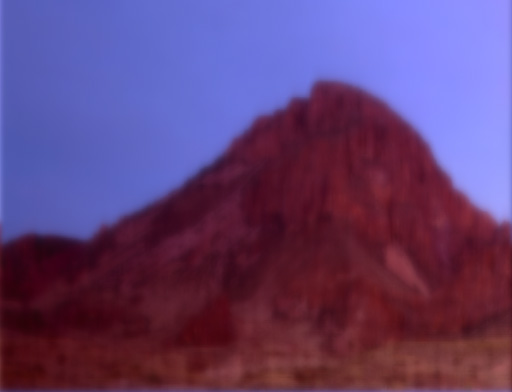
An image of
a
southwestern mountain with
synthetic blur added.
The blur was
removed from the image using
the SeDDaRA process (as
shown when you
pass your mouse
over the image).
|
How
does
it work? In a nutshell, the
degradation is extracted from the
degraded
image through a series of
mathematical operations. The
degradation is
then
used to 'clean up' the data. This
algorithm does not create
information
that
is not buried in the image. Thus, a
blurry image with a low
signal-to-noise
level dose not reconstruct well.
This also applies to highly
compressed
jpeg images. However, if there is
information there to retrieve, this
process will retrieve it, without
artifacts. More examples can be
viewed
in the
Gallery .
SeDDaRA
is a
non-iterative method. It takes
only one application to produce
the result. This is the main
advantage over the more common
iterative methods. There is a
prevailing notion that the more
processing you apply to an image,
the more you can restore.
Hollywood reflected this idea on the
TV show "Numb3rs". In
the show, a
physicist/mathematician helps his
detective brother solve murders in
similar fashion to CSI. In one
episode,
the main characters were using some
iterative technique to restore a
security video.
The detective was skeptical that it
would work, but the Physicist
assured him that "There is almost no
limit to how much you can enhance
an image." I bursted out
laughing! I think a more
accurate
statement
is "There is almost no limit to how
much you can process an
image." How well you enhance
the image is different
question. SeDDaRA can identify
and remove very complicated blur
functions as well, if not better
than iterative methods, and do so on
a
much shorter time frame.
|
|
|
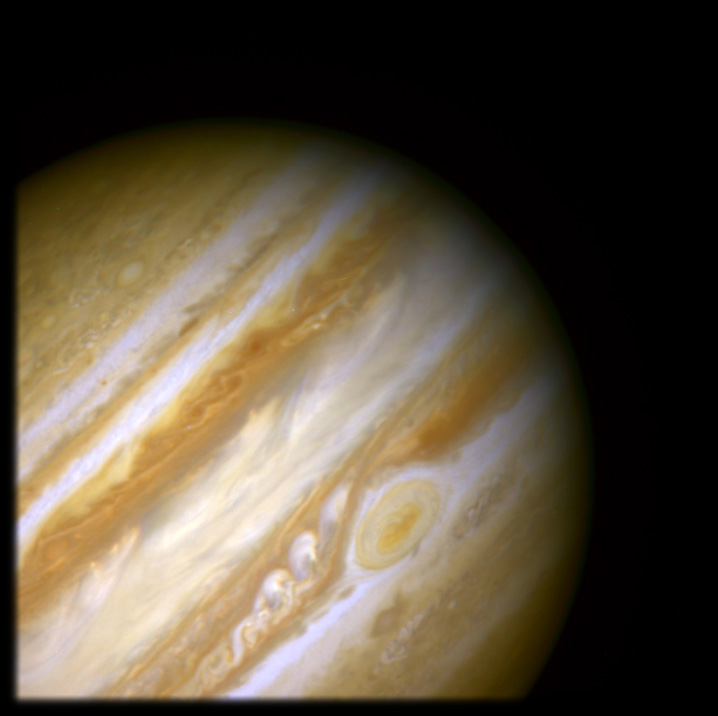
An image of the Eye
of Jupiter
|
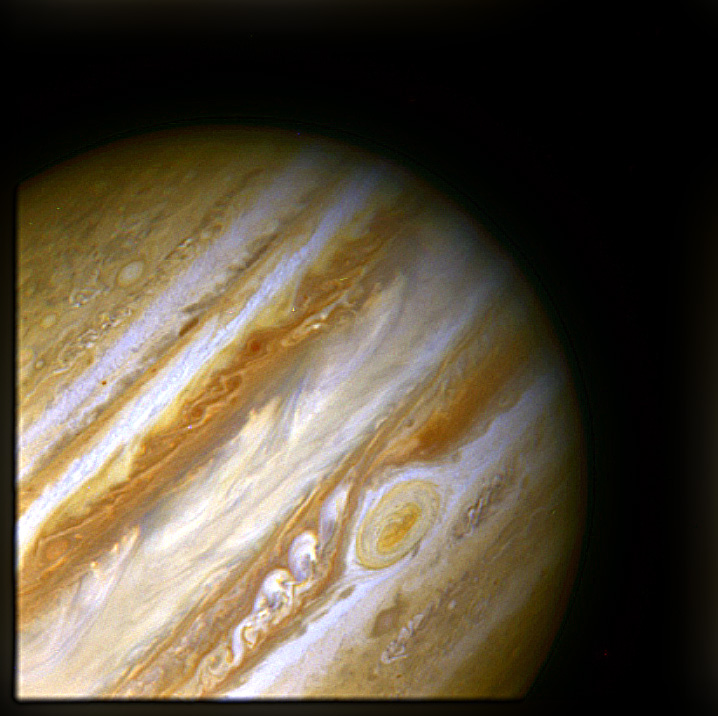
A restoration of
the image using
the SeDDaRA process.
|
For
further
information, you can read the news
article in the November 2001 issue
of LaserFocus World, or
see the articles in Optics
Letters and
Applied Optics. References
can be found in Research.
Research performed since then has
found that
the
algorithm described in these
articles is actually an
approximation of
the
full theory. The approximation
theory has since been designated
the
'Caron'
filter. Full application of the
theory produces superior results
with
some
additional processing. This paper
was published in Applied
Optics
in November 2002.
You
can also read
more
about blind deconvolutions here.
A
discussion on the differences
between image restoration and
image
enhancement is here.

|